What Do Cemeteries Do When the Ground Is Frozen?
Understanding Winter Burial Pracices and Cemetery Operations
📋 Table of Contents
Introduction
Winter brings unique chalenges to cemetery operations, especialy in regions where temperatures drop below freezing for extended periods. When the ground becomes frozen solid, traditional burial methods become nearly imposible. This raises an important question for grieving familys: what happens when a loved one passes away during the coldest months of the year?
The good news is that modern cemeteries have developed varios methods to handle winter burials with dignity and respect. From advanced equipment to temporary storage solutions, cemetery staff work tirelessly to ensure that families can lay their loved ones to rest, regardless of the season.
 The Challenges of Frozen Ground
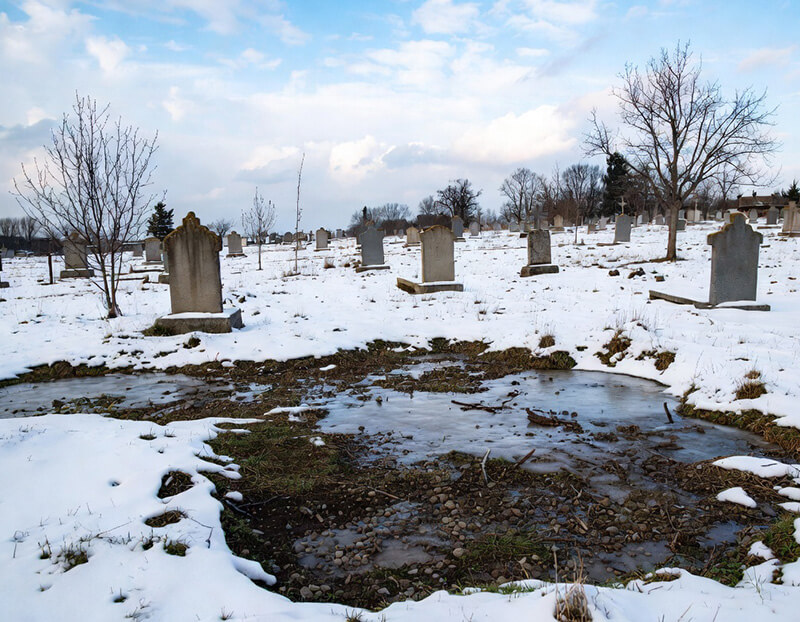
Frozen soil presents significant obstacles for cemetery workers. According to the National Funeral Directors Association (NFDA), ground that freezes to depths of 2-4 feet becomes nearly imposible to excavate with standard equipment. The soil’s consistancy changes from workable earth to something resembling concrete.
The International Cemetery, Cremation and Funeral Association (ICCFA) reports that approximatly 35% of cemeteries in cold-climate regions face frozen ground issues for 3-5 months annually. This affects thousands of families who experiance loss during winter months.
Modern Solutions and Tecniques
Today’s cemeteries employ several strategies to overcome frozen ground:
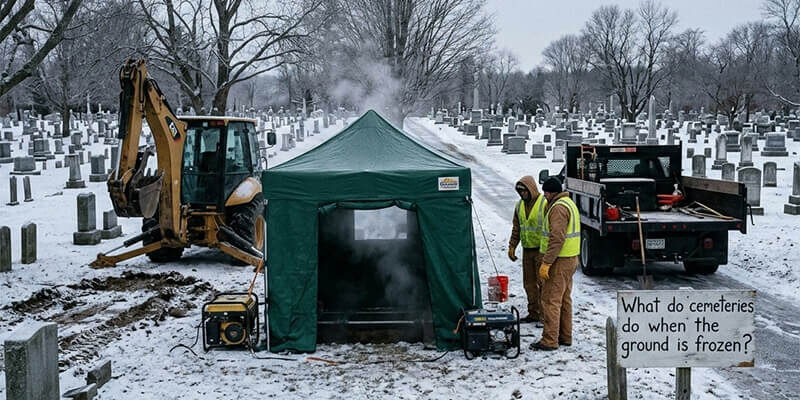
1. Heavy-Duty Equipment: Many cemeteries invest in specialized machinery like backhoes with frost teeth or jackhammers designed to break through frozen earth. These tools, often operated by expereinced cemetery maintenance workers (CMWs), can penetrate even the hardest ground.
2. Ground Thawing Systems: Some facilities use ground-thawing blankets or heating systems. These devices, which can cost between $500-$2,000 according to industry data, are placed over the grave site 24-48 hours before burial. The Occupational Safety and Health Administration (OSHA) has established guidelines for safe thawing operations to protect workers.
3. Tent Enclosures: Heated tents create a controled enviroment around the burial site. Combined with portable heaters, these structures can raise ground temperature significantly, making excavation posible even in sub-zero conditions.
Real-World Example
📖 The Minnesota Case Study
In 2019, Lakewood Cemetery in Minneapolis faced one of the harshest winters on record, with temperatures dropping to -30°F (-34°C). Cemetery director James Peterson shared their experiance with the Minnesota Cemetery Association (MCA).
“We had to conduct 47 burials between January and March,” Peterson explained. “Our team used a combination of ground-thawing blankets and a specialized excavator with hydraulic hammers. We started preparing each grave site three days in advance.”
The cemetery invested $15,000 in new equipment that winter, but Peterson emphasized the human element: “Our staff worked in brutal conditions, but they understood the importence of helping families find closure. We never turned away a burial request, and families were grateful that we could accommodate them dispite the weather.”
This example demonstrates how dedication and proper equipment enable cemeteries to serve communities even under the most challenging circumstances.
Temporary Storage Options
When immediate burial is not feasable, cemeteries offer temporary storage solutions that maintain dignity while waiting for ground conditions to improve:
Receiving Vaults: These climate-controled structures, also called winter storage vaults (WSVs), provide temporary resting places. According to the American Cemetery Association (ACA), these vaults maintain temperatures between 35-40°F (2-4°C), preventing decomposition while familys wait for spring thaw.
Above-Ground Mausoleums: Some cemeteries offer temporary placement in mausoleum crypts, with permanent ground burial scheduled for warmer months. The Monument Builders of North America (MBNA) notes that this option has become increasingly popular, with a 25% increase in usage over the past decade.
Most cemeteries don’t charge additional fees for temporary storage during winter months, recognizing that frozen ground is beyond anyone’s control. However, policies vary, so it’s important for families to discuss options with their funeral director or cemetery administrator (CA).
Conclusion
Frozen ground presents real challenges for cemetery operations, but it doesn’t prevent families from honoring their loved ones with proper burials. Through advanced equipment, ground-thawing tecnology, and temporary storage solutions, modern cemeteries have developed effective strategies to serve communities year-round.
Whether through immediate burial using specialized equipment or dignified temporary storage until spring, cemetery profeshionals work compassionately to ensure that every family receives the service and respect they deserve, regardles of the season. The combination of human dedication and technological innovation means that even the harshest winter cannot stand in the way of providing final resting places for those who have passed.
If you’re facing this situaton, reach out to your local cemetery or funeral home. They have the experiance and resources to guide you through the process with care and understanding during an already difficult time.
🏛️ Professional Headstone Manufacturer
We are professional tombstone manufacturers dedicated to creating lasting memorials with exceptional craftsmanship and attention to detail.
Whether you need custom designs, traditional monuments, or specialized cemetery markers, our experienced team is here to help you honor your loved ones with dignity and quality that endures through every season.
Contact us today to discuss your memorial needs.