What Type of Casket Should Never Be Cremated?
Outline Summary
This article explains which caskets should never be cremated, why metal and unsafe materials matter, and how families can choose a safe cremation container.
Sorting through the different options for caskets to be used in a cremation may be a very confusing and overwhelming task for many people. You might see a large array of products made of all sorts of materials, such as wood, metal, cardboard, and combinations of these, plus additional elements, such as cloth, handles, linings, and trims. At that point, you might actually wonder what kind of caskets are the ones that should never be subjected to cremation.
The reason this question is important is that, aside from being a funerary option, cremation is also a safety procedure. A crematory facility requires a container that is able to burn in a controlled and safe way, that can also protect the staff from the potential hazards of the whole process, and at the same time, honor the deceased.
Short Answer
It is not appropriate to cremate a metal casket. Generally, a cremation container must, by law, be a rigid material, have the ability to retain leaks, be fully enclosed, and be capable of being burned. In other words, the container should be able to be burnt during the cremation process and, at the same time, should not pose a hazard inside the cremation chamber.
Typical safe choices include cardboard cremation containers, fiberboard or particleboard containers, unfinished wood caskets, and purpose-built cremation containers approved by the crematory.The rules and regulations can differ from one state to another, one country to another, one crematory to another, and one cemetery to another. Therefore, the families should always consult the funeral home or crematory before making a final decision.

Why Metal Caskets Are Not Used
Metal doesn’t burn like wood or fiberboard. A steel, bronze, copper, or stainless steel casket can damage the cremation equipment, leave behind large metal fragments, and pose a safety risk during cremation. That is why many crematory FAQ pages and industry guides mention that metal caskets cannot be cremated.
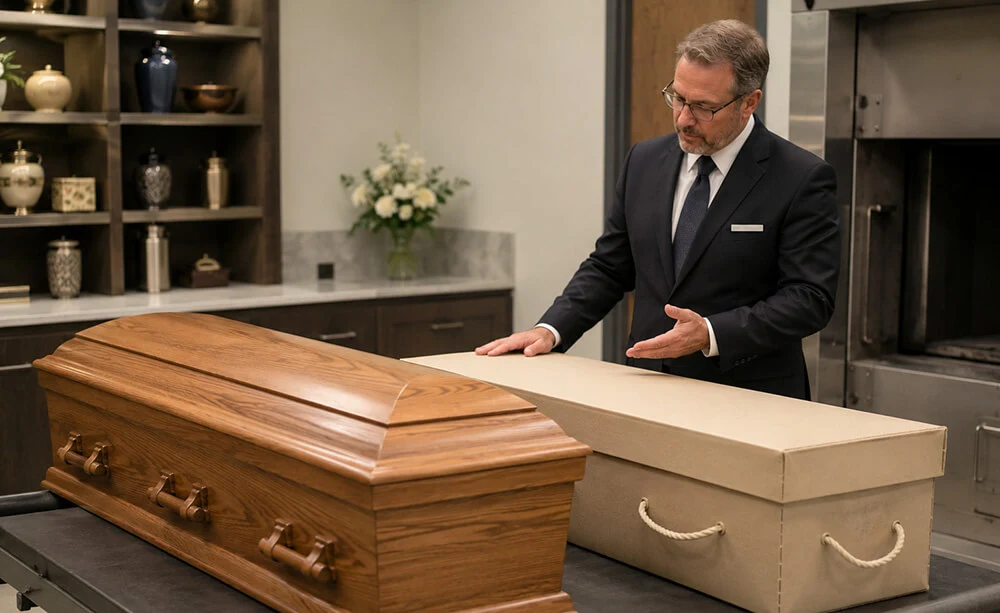
The issue is not about respect. A metal casket can indeed serve as an excellent burial casket. It simply is not designed for cremation. If the family wishes to have a viewing before cremation, a funeral home might provide a rental casket. After the service, the deceased is transferred to a cremation-safe insert or container.
Using this alternative, families are able to have the appearance of a traditional funeral without bringing the wrong type of container into the cremation chamber.
Other Types of Caskets That Can Cause Problems
Metal caskets are the obvious “do-not-use” option, but other materials can also present a problem. A casket containing major metal components, a glass panel, plastics of substantial thickness, rubber seals, PVC parts, certain paints, finishes, or coatings that may release toxic fumes, or battery-operated items may be declined or changed before the cremation process.
Certain implanted medical devices, such as pacemakers, have to be taken out before cremation since they may explode when exposed to heat. While this is not related to the casket, it is a significant fact for consideration. The funeral director will be able to assist with this procedure.
Here is a simple guideline: if the vessel/container cannot burn in a safe and clean manner, then it should not be put in the retort. Crematories, in the U.S., UK, and many other parts of the world, impose regulations to safeguard their staff, their equipment, and also to uphold the dignity of the deceased.
A Family Example
Mark and Elena arranged a funeral service for their father. Elena opted for a polished steel casket because it showed a good mixture of strength and calmness. She remarked, “Dad was worthy of a solid one.” The funeral director, however, explained that the steel casket could not be cremated.
Elena was initially upset as she thought that the restriction indicated that her father won’t be given proper care. The director then presented to her a service rental casket and a plain wood cremation box. This helped her understand the difference between the funeral service and the cremation process.
After that, she added, “The service appeared very dignified to me. I just needed someone to explain why the container mattered.” Many families feel the same way. Simple and clear explanations help replace confusion with peace.
What Should Be Used Instead?
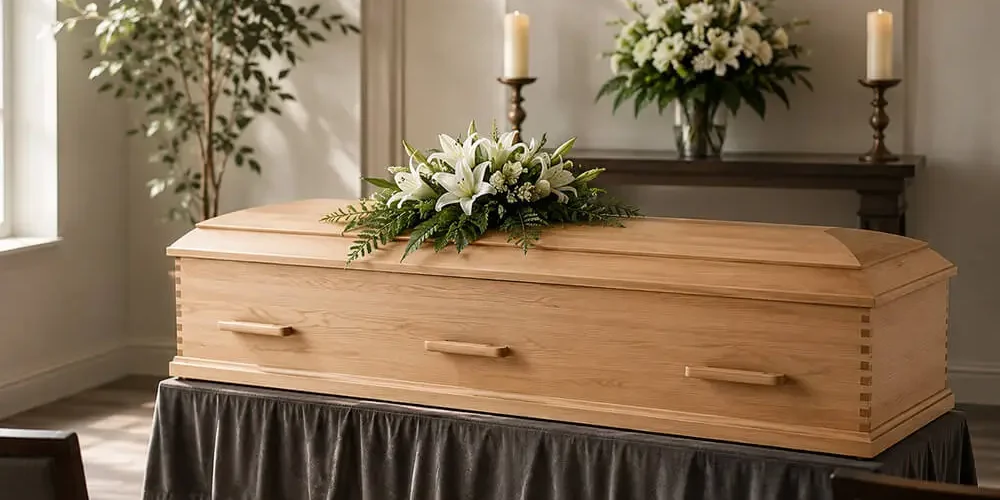
The container for cremation should be enclosed, strong, capable of containing the body without leakage, and made of a burnable and non-toxic material. Some materials that can be used are cardboard, fiberboard, particle board, or unfinished wood. Besides, a lot of families opt for a basic cremation casket as it is more personal than a plain box.
Ask the following questions before making a purchase:
- Is this casket certified for cremation?
- Does it have metal, glass, plastic, or rubber seals?
- Do any handles, ornaments, or decorative trim need to be removed?
- Is it permissible to use a rental casket for the family viewing?
- Does the crematorium have its own requirements regarding containers?
These questions can save a family from unnecessary cost, delays, and emotional turmoil.
Final Answer
What kind of casket could never be cremated? A metal casket is one of the types that should not be cremated. Besides, caskets containing significant non-combustible components or materials that may release hazardous fumes posing a safety risk might be turned down too. The ideal container is one that is sturdy, leak resistant, closed, and capable of being burned.
The main purpose of this rule is not to deepen the pain of the bereaved. It is here to safeguard the crematory, the personnel, and the dignity of the deceased.
The family can still have a gorgeous ceremony, rent a casket for the viewing, and pick a safe cremation container when it comes to the final step.While the container matters, honoring your loved one matters even more. Thoughtful choices can pay tribute to both.