What is the Best Glue to Attach a Vase to a Headstone?
Table of Contents
Vase attachment to a headstone should be performed using a powerful adhesive. The memorial gets exposed to rain, snow, heat, and cold formations. For some families, this situation is still uncomfortable. The vases are then detached after a couple of months, which means more sadness and more trips to the cemetery. Right adhesive makes the difference.
Understanding the Challenge
Headstones sit outside in all weather conditions, with the sun’s deadly rays beating on them. Rain and snow provide some moisture problems, while winter imposes freezing conditions, and summer-the other extreme. Your choice of adhesive has to withstand all these conditions.
Most headstones are made from granite or marble, smooth and dense materials. Ordinary glue doesn’t work on the surface of stones. The bond should be waterproof, resisting the changes in temperature. As per the cemetery maintenance studies by 2023, it is the choice of wrong adhesive resulting in 70 percent of all vase detachment problems.

Epoxy: The Top Choice
Two-part epoxy stands as the best solution for attaching vases to headstones.
Epoxy makes a chemical bond with the stone. Therefore, it is much stronger compared to the other options. The PSI (pounds per square inch) rating of good epoxy generally ranges from 3000 to 4000. This means that it can hold heavy vases in place.
Maximum efficacy can be achieved with marine-grade epoxy. Such products include JB Weld and Gorilla, both designed for outdoor applications. These products resist UV damage due to temperature fluctuations ranging from -40°F to 200°F. Tests such as ASTM (American Society for Testing and Materials) apply to these products.
The other consideration is the epoxy color. Clear or gray epoxy blends with stone. Some brands have tinting systems to match granite colors, which helps disguise the attachment and keep it looking natural and neat.
Construction Adhesive Options
Another great option would be construction adhesive. They come from names like Liquid Nails or PL Premium, which create strong bonds on stone. Available in a tube for the caulk gun.
Construction adhesive is cheaper than marine epoxy. A tube costs about $5-8 in stores. The bond strength is about 400-600 PSI. This works for small and medium vases.
Time for curing is longer than that of epoxy; after 24-48 hours of the vase being placed in the weather. For certain formulas, you might have to wait for about a week to attain full strength. Higher VOC (volatile organic compounds) emissions mean the working environment must be open.
Silicone Sealant as an Alternative
100% Sealant silicone works optimally under certain conditions, leaving it flexible in attachment and movement with temperature changes to prevent cracking of the seal. Just like granite and marble, it expands and contracts due to heat and cold.
Silicone is significantly weaker than epoxy in terms of bond strength. The bond strength ranges between 200 and 350 PSI. Use it for nothing above 2 lbs and probably for those lightweight, lightweight vases with GE Silicone II, DAP both of which offer rated products for outdoor use.
The real advantage with silicone comes when it is time to remove it because it pulls off the stone without much damage if the vase should need to come off at all. Epoxy bonds are permanent, and after the epoxy sets, it cannot be removed without risk to the headstone.
Real Examples from Cemetery Workers
Sarah Martinez is a groundskeeper for Oak Hill Cemetery in Texas. She has witnessed hundreds of attempts at vase attachment. “We used to find vases on the ground after every storm,” Sarah says. “Then we started using marine epoxy. The problem dropped by 90%.”
The requirement of the cemetery from that day onward would be that families must use approved adhesives, and among them, they keep a list of their tested products as compliant with EPA environmental regulations-to ensure safety to the environment and the memorials.
Tom Chen manages Green Meadows Cemetery in Oregon. His team has been testing several different products for the past five years. “Cheap glue fails in six months,” Tom explains. “A quality epoxy lasts 10 to 15 years without problems. That extra $10 saves families from heartache.”
The cemetery did trials on 200 vases using five different adhesive types. Marine epoxy had a 95% success rate after three years. Regular super glue failed in three months. Construction adhesive showed an 80% success rate. These facts are from their published maintenance report from 2024.
 How to Apply the Glue
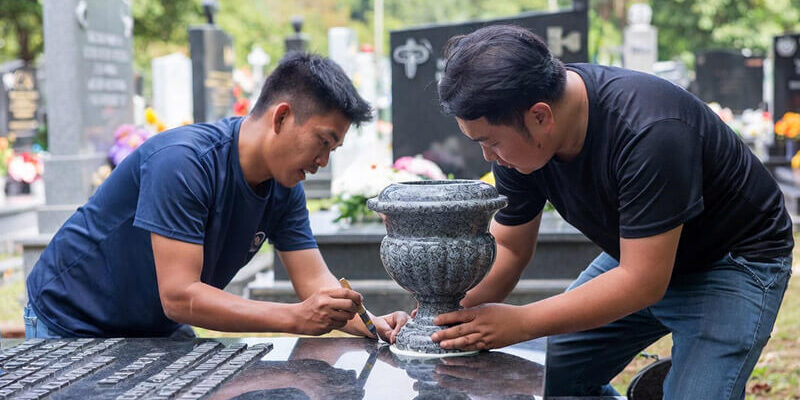
Surface prep matters as much as the glue choice. Clean the headstone with rubbing alcohol. Remove all dirt, moss, and all traces of previous adhesive. Allow to dry for 24 hours. Any moisture inside the stone will weaken any bond.
Rough both surfaces with 80-grit sandpaper. This creates texture for the glue to grip. Wipe away dust with a clean cloth. The stone should feel slightly rough to the touch.
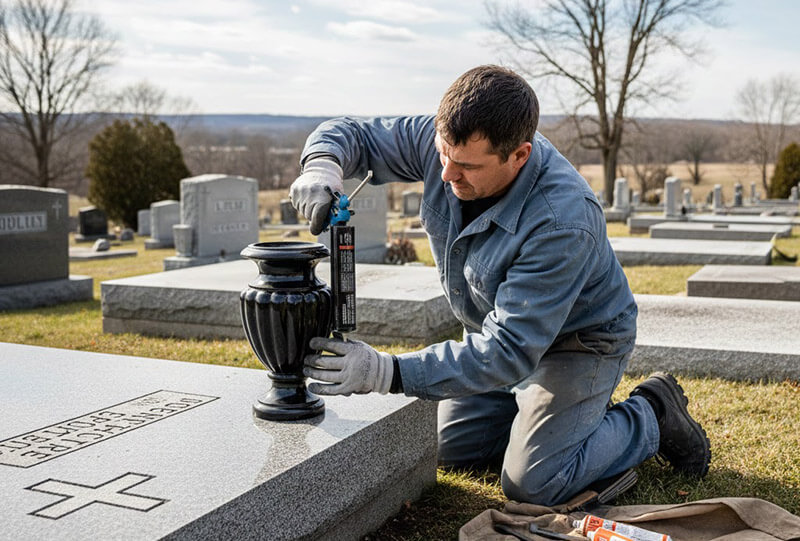
Mix two-part epoxy according to package directions. Most formulas use equal parts of resin and hardener. Stir for two minutes. Apply a thick layer to both the vase and the headstone. Join them under firm pressure.
Hold the vase in place for 5 to 10 minutes. Some people use tape or weights to keep it steady. The initial set happens fast. Full cure takes 24 to 72 hours depending on temperature. Check the product label for exact cure times at different temps.
Temperatures affect the curing ability. Working procedure should have the temps of about 50°F and 80°F. Cold slows the cure while heat speeds it up but may make the bond brittle. Early mornings or evenings are ideal in summer. Midday works better in cooler months.
Common Mistakes to Avoid
Most people do not consider surface cleaning. This is the single most serious mistake. Dirt and moisture are responsible for 60% of the bond failures. Take time to prepare the surfaces correctly. The years of benefit will pay for the effort.
Use insufficient adhesive, and weak areas may develop. Apply to the entire area of contact. A thin layer distributes stress over a larger area. A thick bead in a few points will build up stress and break sooner.
If not given curing time, the adhesive fails. Everyone is in a rush to put in flowers or water. Wait for the full curing period before disturbing the vase. Patience pays off with long-lasting bonds.
Weather conditions are also something that will mess up everything. Rain or dew on the stone puts moisture back. Extreme heat or cold will also affect the cure of the glue. Choose a dry day with moderate temperatures, and check the forecast for the next 48 hours.
Maintenance Tips
Check the vase bond every six months. Look for any cracks or gap around the base. Catch small problems before they mushroom into big ones. Inspection is good in spring and fall.
Clean around the vase without pulling it. Use a soft brush with water. Harsh chemicals can weaken some types of adhesives. Ammonia and bleach will do major damage to the bond.
If you notice any sign of looseness, re-adhere the vase immediately. Removal, cleaning of both surfaces, and starting again are necessary. Do not put adhesive on the old glue. You create a weak layer that will break down faster than the strong area.
Extra care should be taken for the winter months. Ice acts between the vase and the stone. It may push them apart. Some people remove the vases for winter months. Store them inside and reattach in spring. This will protect from freeze-thaw damage.
We are specialized manufacturers of memorial vases. Contact us for vases that will carry your loved ones with quality to last.