Can You Have a Granite Headstone After Cremation?
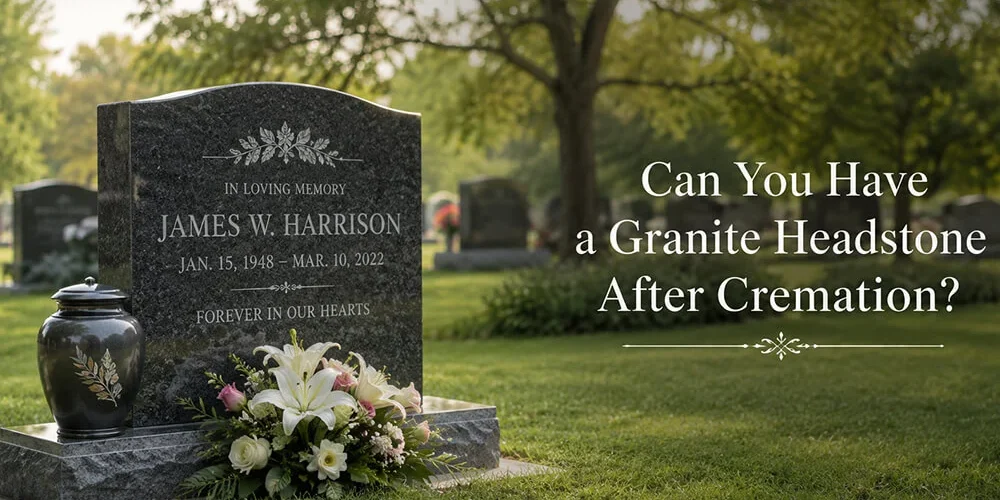
Yes, you can have a granite headstone after cremation. Cremation describes how the body is cared for, while a headstone creates a permanent place of memory. Many families bury an urn in a cemetery plot and place a granite marker above it. Others add cremated remains to an existing family grave.
This can bring relief to people who fear that cremation means giving up a traditional grave or lasting memoral. In reality, cremation and a granite headstone can work together in several ways.
How Is a Granite Headstone Used After Cremation?
A common option is to bury the urn in a cremation plot. This plot may be smaller than a standard casket grave, but it can still support a flat marker, slant marker, or upright granite headstone.
Some cemeteries also allow an urn to be placed in an existing family grave. The family may add a new insciption to the current stone or order a separate companion marker. The exact arrangments depend on the rules of the cemetary.
The U.S. Federal Trade Commission, or FTC, advises families to check which monuments a cemetery permits. It also notes that burial or placement of cremated remains may involve opening, closing, maintenance, crypt, or niche fees.
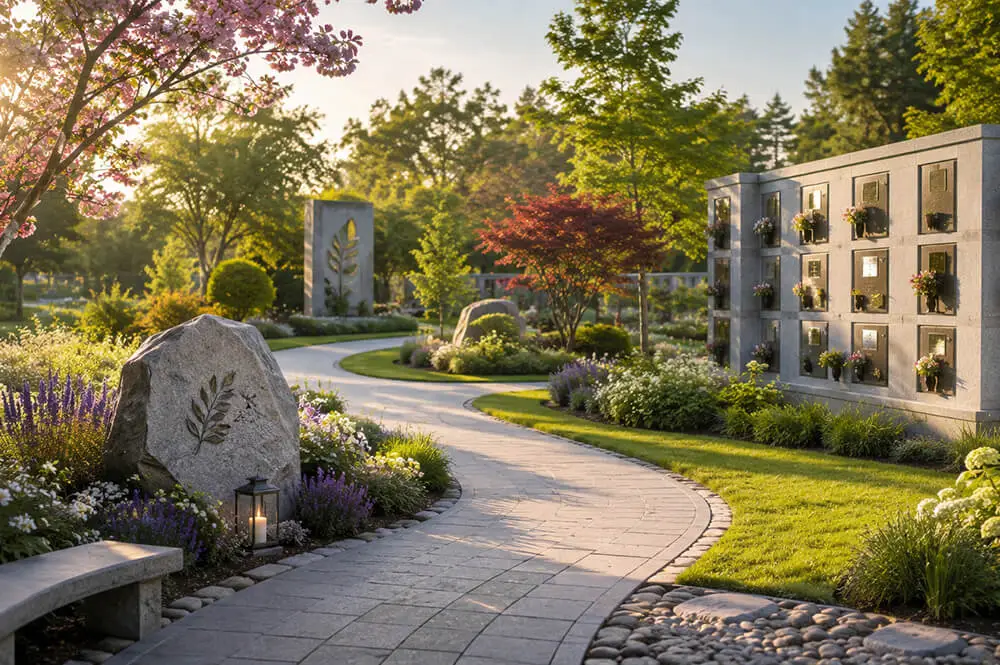
The No. 1 step is simple: speak with the cemetery before ordering the stone.
What Types of Granite Memorials Can You Choose?
A family can choose from several designs:
- A flat granite grave marker
- A small upright headstone
- A slant-style memorial
- A companion stone for two people
- A headstone with one or more urn chambers
- A marker added to an existing family plot
For eligible veterans, the VA offers flat granite markers and upright granite headstones. It also offers bronze niche markers for columbaria that hold cremated remains. The chosen style must be accepted by the cemetery responsible for the site.
Rules in the UK, U.S., and other countries can differ. Some natural burial grounds may limit polished stones or upright monuments. Others may use small markers, plants, maps, or GPS records.
Why Do Families Choose Granite?
Granite is popular because it is strong, weather resistant, and suitable for many designs. It comes in black, gray, red, blue, green, and other natural colors. A monument maker can add names, dates, flowers, crosses, portraits, and personnal symbols through sandblasting or etching.
The NPS describes granite as a compact, hard stone with low porosity. It considers granite resistant to weathering and notes that deterioration may remain difficult to see for many years.
This durabilty makes granite a dependible choice for families who want the lettering to stay clear through rain, frost, sunlight, and seasonal change.
A Family’s Experience
After their mother died, Daniel and Lucy chose cremation. Their mother had asked for some of her ashes to be scattered near the coast.
Lucy supported the plan, but she worried about the grandchildren.
“We would have memories,” she said, “but nowhere to take flowers.”
Their funeral director explained that the familys could scatter part of the remains and bury the rest in a small local plot. Daniel and Lucy chose a dark granite headstone with their mother’s name, birth and death dates, and a carved seashell.
The final choise gave them both what they needed. Their mother remained connected to the coast, while the family gained a permanent place close to home.

What Should You Check Before Ordering?
Ask the cemetery for its current rules or FAQ before approving a design. Important questions include:
- Which marker sizes are allowed?
- Can you install an upright headstone?
- Is a foundation required?
- How many urns can the plot hold?
- Are there color or finish limits?
- Who may install the monument?
- What fees are not included?
A monument dealer may provide an approx. price and prepare a CAD drawing, but production should wait until the cemetery approves the size and design. This protects the family from added costs and unwanted changes.
Final Answer
So, can you have a granite headstone after cremation? Yes.
The urn may be buried beneath the stone, added to a family grave, or placed in another approved memorial space. The headstone gives the person’s name and story a visible place.
Cremation does not prevent traditional rememberance. For many families, the granite marker becomes somewhere to visit, leave flowers, and speak a loved one’s name. It cannot hold every memory, but it can give those memories an address.