📋 Article Outline
Tombstones are a way of preserving the memory of loved ones forever. Unfortunately, a lot of families make wrong decisions when designing tombstones which may later lead to regret. By understanding different materials and avoiding inappropriate cultural references, families can create a tombstone that serves as a dignified and lasting tribute. The article takes a look at different experiences in various countries and offers advice backed by research on how to come up with impactful memorials.
Unsuitable Choice of Materials
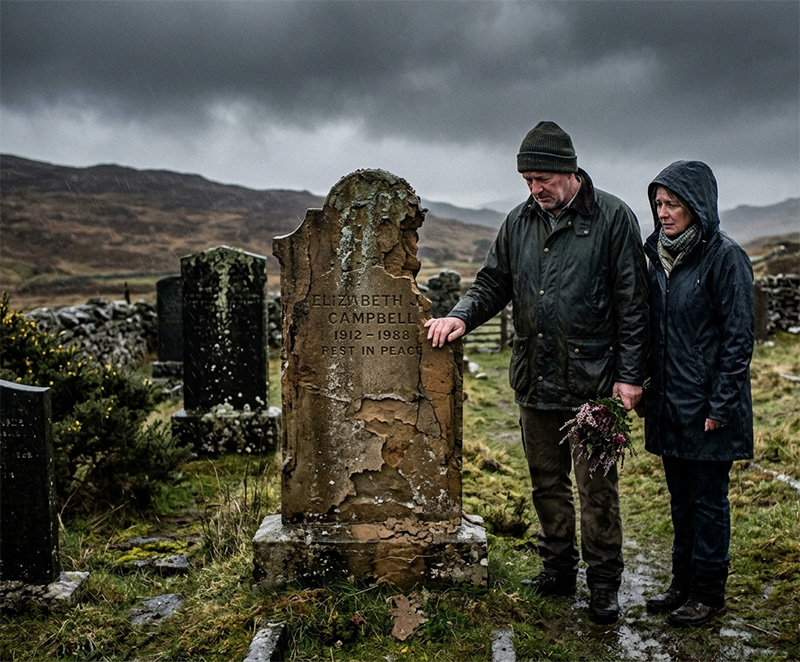
One of the biggest errors most people fall into is selecting the wrong materials that are incompatible with the weather conditions of a particular area. A family in the UK, for example, used sandstone to make a headstone for their father in a Yorkshire cemetery. Within only five years, the stone had gotten really ruined due to the heavy rainfall in the area and the stone freezing and thawing over time. The British Register of Accredited Memorial Masons (BRAMM) has stated that roughly 30% of sandstone headstones placed in locations that are wet exhibit visible damage within ten years.
In the case of the Nakamura family in Japan, they got their grandmother’s tombstone made of imported marble and placed it in Hokkaido. The marble was prone to water absorption after which it froze and split during the severe winter. They had to replace it within 3 years. Using local granite would have been a better and cheaper option.
When planning to purchase materials, one should check with the Environmental Protection Agency (EPA) as well as local Cemetery Management Associations (CMA) for guidance and recommendations. Granite is still the most resilient material for almost all weather types and can last over 100 years if taken care of properly.
Inscription and Engraving Mistakes
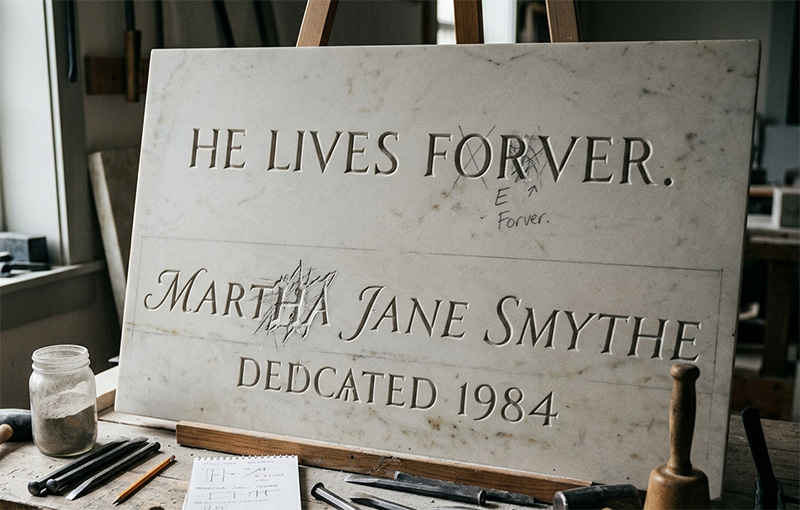
Writing the wrong date at the time of engraving is one of the most painful mistakes in tombstone design and it is very hard to fix or replace. For example, in Australia, the Chen family realized their mother had been born in 1953 but the memorial carried “1952” after the memorial was installed. Changing the mistake meant spending over AUD $2, 000 and the whole engraving of the date panel had to be done again.
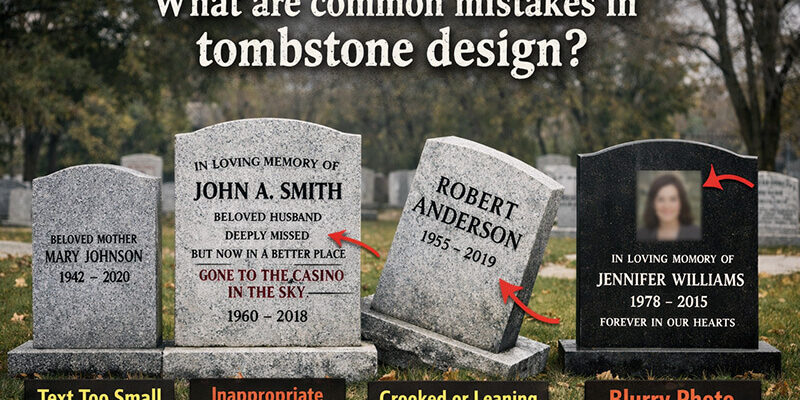
The International Association of Cemetery Preservationists (IACP) researched and reported that about 1 out of 50 tombstones have at least one factual error. Some of the most common blunders/mistakes are:
- Incorrect dates (birth, death, or marriage)
- Names or initials that are misspelled
- Wrong military ranks or honors
- Text illegibility caused by improper font size
- Religious symbols that are not of the deceased
The National Funeral Directors Association (NFDA) advises getting details verified by at least three members of the family before the engraving is finalized.
Cultural Insensitivity
Tombstone errors that do not respect cultures become a major source of suffering to the bereaved family members and the communities they belong to. A family in Singapore wanted a memorial for their Hindu grandfather but ended up having Buddhist symbols in it as they found them “nice looking.” This led to strife in the extended family and the tombstone had to be changed at a large cost.
Note: A Christian family in Malaysia made a mistake of placing orientation of their father’s memorial contrary to Feng Shui (FS) principles, which was a cause of upset of the traditional family members. Although quite a number of families do not observe such practices, consulting cultural or religious experts from the Religious Heritage Foundation (RHF) can help avoid inconveniences.
Research by the Global Memorial Standards Organization (GMSO) reveals that 15% of differences over monuments are caused by cultural or religious blunders. It is very important to choose monument designers who are knowledgeable about cultural traditions, considering, for example, multicultural societies.
Neglecting Long-term Maintenance
Many families get so caught up in the initial design pleasure of a lavish piece that they do not think of what continual upkeep is going to be a huge ongoing consuming task. In France the Dubois family decided on a monumental piece of an intricately carved limestone with a number of ornamentations. Just ten years later the biological growth had filled up the carvings to such an extent that full cleaning was only possible through professional intervention costing 500 euros a year.
The European Cemetery Association (ECA) conducted a survey in 2023 revealing that monuments with deep engravings or complex textures demand 3-4 times more maintenance than simple, polished designs. Also, horizontal tablets tend to collect leaves and debris which, in turn, can lead to staining and eventual deterioration.
Practical Tip: The Thompson family in Canada went for a medium height monument having very few small recesses and a protective sealant which has been recommended by the Canadian Monument Preservation Society (CMPS). Two decades later, the memorial still has a beautiful and clean appearance and it has been only subjected to an annual cleaning in the meantime.
Performance of weather-resistant coatings together with the use of a correct base can hardly be overemphasized. According to data from Independent Memorial Testing (IMT), monuments lacking proper drainage systems are 60% more likely to develop structural problems within 15 years.
 Conclusion
A thoughtful memorial is not just about selecting one material over another but also ensuring the memorial accurately represents who is being commemorated, respects the culture of the person and community, and is resilient enough to withstand the passage of time. Incidents or errors can be found in the figures from the UK, Japan, Australia, Singapore, Malaysia, France, and Canada but they should not be seen as inevitable. In fact, with the right approach of doing thorough research and consulting the experts, these errors can be easily avoided.
It is prudent you find certified memorial designers who are familiar with your region, who double check facts, who are sensitive to cultural elements, and who can not only think of the aesthetics but also the functionality when they come up with the designs. Also, if you are able to take advantage of other people’s mistakes and at the same time attend to the guidelines set forth by the organizations such as BRAMM, NFDA, and GMSO, then you will be able to come up with a beautiful, respectful tribute that your descendants will continue to look up to.
At the same time, you are not only making a memorial. You are making an investment in memories. It is a memorial to the past but also a memorial to the future. So, remember to get everything right the first time because each mistake costs time and money.