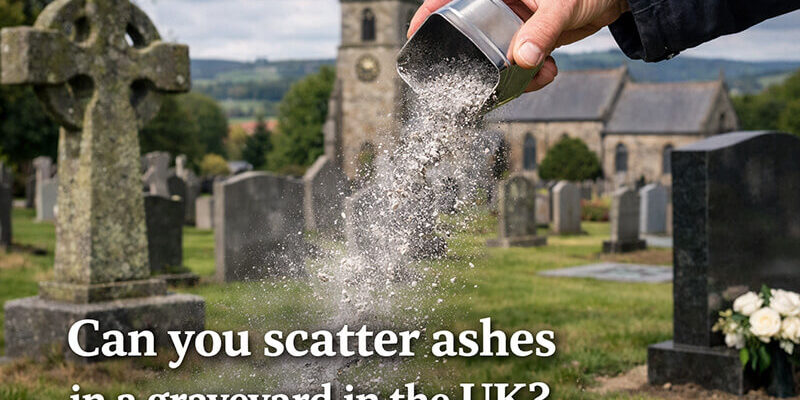
Can You Scatter Ashes in a Graveyard in the UK?
Table of Contents
What to do with someone’s ashes after their demise is one of the most intimate decisions families make after cremation. Thousands of families across the UK would like to know whether one’s ashes may be scattered at his burial site, at a family plot, or otherwise in a wonderful part of an ancient churchyard. Unfortunately, the answer is not as simple as one might have wished, but knowing the rules will at least make you capable of discerning what is the right decision for your family.
Regulations On Scattering Ashes In The UK
There is no single law in the UK that tells where to scatter ashes and where not to scatter ashes. Instead, Instead, the specific regulations depend on who owns and manages the burial ground. According to the Ministry of Justice (MoJ), which oversees burial and cremation regulations in England and Wales, permission from the landowner is generally required.
Institute of Cemetery and Crematorium Management (ICCM) promulgates guidelines which most burial authorities choose to adopt. ICCM guidelines state that there are designated areas where cremated remains may be scattered. However, permission must always be duly obtained before scattering. This is not just bureaucracy for its own sake-because other families may be using the same area, and the dignity of the burial ground must be preserved.
Scattering Ashes into Church Graveyards
Church of England (CoE) graveyards operate under ecclesiastical law, and thus have their own specific set of rules. If you would like to scatter ashes in a churchyard, you will need to seek the parish priest or vicar’s permission. In most cases, they freely grant approval, especially if your family has roots in the church or the deceased was a parishioner.
Officially, the Church of England maintains churchyards are consecrated ground where Christian burial takes place, so it is technically right to scatter ashes in churchyards, subject to defined areas set aside. Each parish would have some level of discretion, however. For example, certain churches have earmarked a particular “Garden of Remembrance,” where ashes may either be scattered or interred, usually with a small plaque or memorial stone marking the site.
With the scattering of ashes in a churchyard, that portion becomes permanently consecrated for use in that particular manner. Hence, it cannot later be determined by the church that a construction will be built at that location or utilized for another purpose-forever binding, in reflection of the holiness of the act.
Municipal Cemeteries and Council Regulations
Most local authorities in the UK run public cemeteries, and each authority has its own regulations. Some councils even encourage families to use the areas set aside by the council for the scatterings in their cemeteries, often asking a small fee (usually £50-£150) for the service, sometimes even including a minor memorial plaque for this service.
For example, there are municipal cemeteries whereby, for a small fee of about £120, one would reserve a date in advance to scatter ashes in dedicated gardens, which also gives time for a short ceremony, and have the scattering entered into the council’s Book of Remembrance. Birmingham City Council also continues to retain scattering areas in their cemeteries and explain the procedure well on their website.
Some councils, however, will not allow the scattering at all, and families are just told to either bury the ashes in a plot or take advantage of the crematorium’s garden of remembrance. It usually arises because they are practical issues in taking care of the grounds so that they are appropriate for the public use of all visitors.
Real-Life Examples from UK Families
Sarah Thompson, who hails from Cornwall, had to make this decision upon her mother’s death in 2019. For her mother, the small village churchyard – where Sarah’s grandparents had been buried – was one of her favorite places, and she had said that she wanted to be there too. Sarah did contact the vicar, who was surprisingly sympathetic.
“Definitely, Mum’s ashes can be scattered at the grave of my grandparents,” recalls Sarah. “He showed us this Garden of Remembrance that they’d created just for that purpose. It’s not precisely where Gran and Grandad are; it’s nearby, but we can now visit them all together. The vicar even did a little blessing for us, and that meant the world to our family.”
Of course, it wasn’t an experience like that for James Patterson in Edinburgh. His father wanted his ashes to go to the graveyard where his wife lies, but the council was particularly strict about it. “They told us we couldn’t just scatter ashes wherever we wanted,” James explains. “But they did offer us a plot in their memorial garden designed specifically for scattering ashes or interment in a small plot. His ashes are now interred beside a beautiful rose bush, and there is a small plaque marking the spot. It was not what we had planned initially, but it is calm and very well-tended.”
Then there’s the story of Mr. London, who belongs to the Patel family from Leicester. Children wanted to scatter the ashes of Mr. Patel in the same cemetery, which had buried his parents decades ago. The cemetery management outright denied scattering, but offered another option – interring the ashes in the family plot for some fee. after some negotiation over the fee, the family of Mr. Patel accepted the proposal and performed a traditional ceremony to bury the ashes in an urn with Mr. Patel’s parents. “It felt right” admitted daughter Priya. “Now, Dad is with his parents, and we know exactly where to find him when we visit.”
Alternative Options for Ash Placement
Even if you would prefer to have the ashes scattered in your cemetery of choice, various alternatives still exist that may still achieve your wishes. Most families choose instead to have the ashes buried. As such, the cremated remains may be placed in a small urn and buried in a family grave or in an ashes plot.
According to the NAFD, about 35% of families choose interment in a cemetery as opposed to scattering the remains. This way, the family has a permanent, marked location to visit and pay their respects. Many cemeteries offer smaller-fashioned plots with affordable costs, specifically designated for cremated remains that can accommodate multiple urns over time.
Another choice, gaining in popularity, is to use the crematorium’s Garden of Remembrance. These gardens have been specially designed to give a lovely maintained setting for the scattering or interring of ashes. Most crematoria across the UK provide these areas and are usually open to anybody, not just the families who used that specific crematorium for the cremation service.
An alternative resolution involves memorial walls and columbaria. These facilities consist of niches designed for the placement of an urn, with an opportunity for people to customize individual plaques. Thus, the wall offers permanence, in lieu of a grave, without the necessity for ground burial, a concept embraced by families who would like to visit one specific, noble location.
Practical Considerations and Etiquette
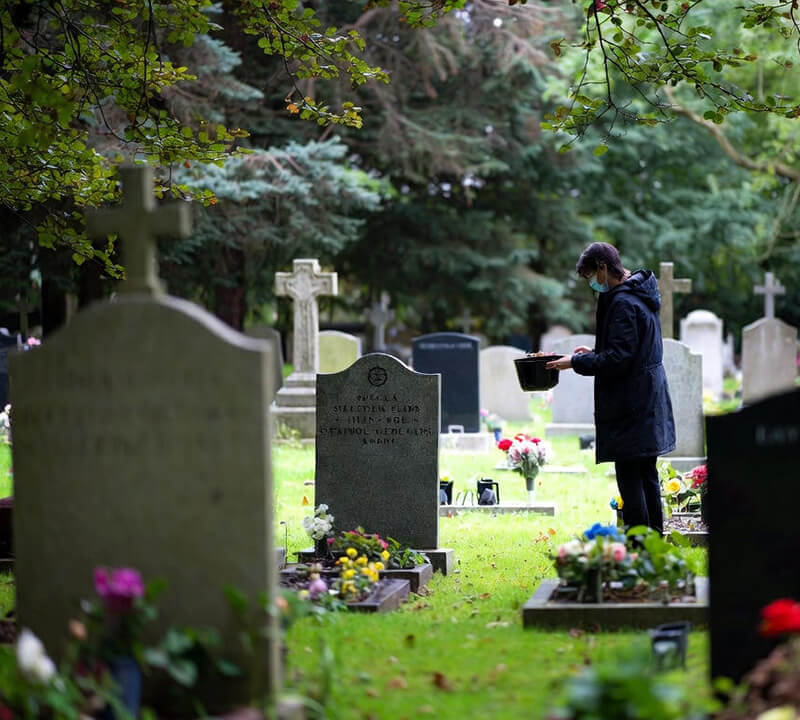
In the event ashes are to be scattered in a cemetery, some practical issues arise. Firstly, the issue of timing. Most burial sites prefer scattering during the day and often request prior notification. This is not so much a bureaucratic measure, but more on ensuring that staff members are present, should assistance be required, and to ensure that the ceremony does not interrupt any other visitors or services.
Weather conditions also play a huge part. A day without wind conditions is preferable because ashes are very fine and may be blown off by the currents quite unexpectedly. Many families that have faced scattering on breezy days recount that it was not a very uncomfortable with ashes blowing on nearby graves or paths, making it hard on everyone concerned.
Environmental regulations require that ashes are scattered in a way that does not cause nuisance or distress to others. While cremated remains are sterile and pose no health risk, scattering should be done in a dignified manner rather than in piles. Respectful dispersal into the designated area should allow gentle settling of the ashes into the soil.
Consider how you will mark the location afterwards. Some families are concerned that if ashes are scattered across a wide area, there will not be anywhere specific for them to visit. Many graveyards solve this by keeping a record of where ashes are scattered, while some allow for small plaques in memorial gardens. Make sure to discuss these arrangements with cemetery management in advance.
Finally, think about who should be present. The scattering of ashes can be an intimate ceremony, but it is also a time for closure. Make arrangements that everybody concerned may attend, and consider whether you’d like a member of the clergy or a celebrant to preside over the ceremony.
Important note:While there is no legal requirement for a national register of ash scatterings, many cemeteries and crematoria keep their own records to help families locate memorial areas in the future. This ensures documentation in the eyes of the law, so that disputes may be avoided. Always make sure the location holds the name of your loved one and the scattering date.
The hardest thing for loved ones to face is deciding what to do with their ashes. The rules on scattering ashes in graveyards have complicated everything for this already emotional time. Be it an age-old churchyard, a public cemetery, or some other alternative; but start the whole process with a conversation. Get in touch with the person responsible early on, tell them why you want to scatter the ashes, and let them give advice on what the policies or regulations may be about.
burial ground authorities / managersreally get what families go through, and they bear in mind dignity in making such meaningfully respectful final resting places. Indeed, follow proper procedure and observe utmost respect toward the space and others that tread the ground; thus, your loved one’s ashes will be in a way scattered respectfully and can later give your family a true sense of peace.
Ultimately, it is the intention that counts more than the specific location. Whether in a designated garden, a family plot, or a memorial wall, it is to be remembered that the decision is made in love and respect. Take time to consider your options, ask questions about them, and make the decision that feels best for your family’s individual circumstances.