Is a Headstone Allowed in Islam?
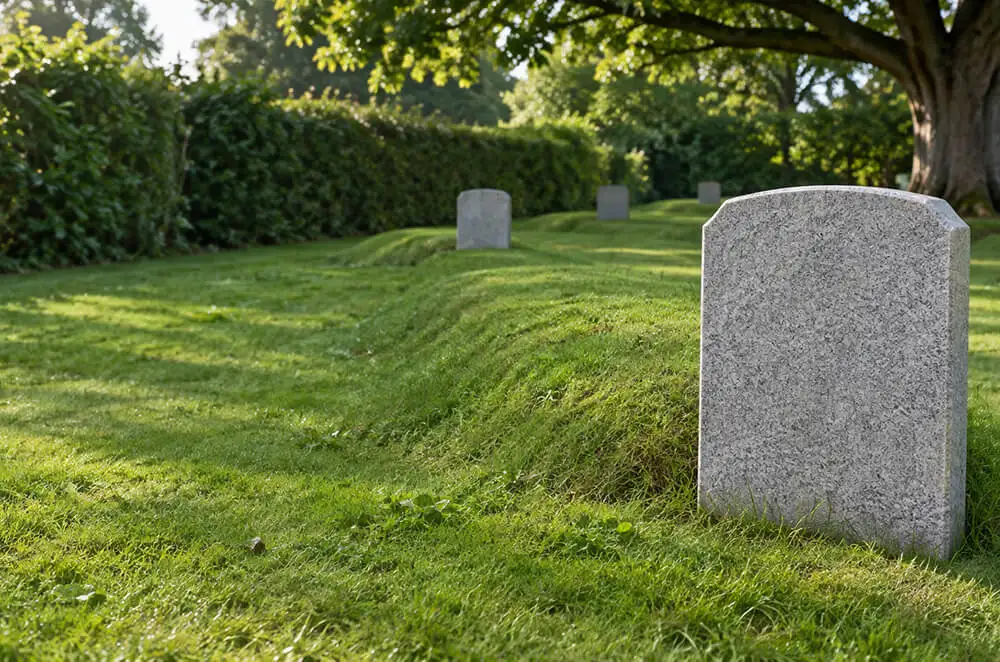
Yes. Many Muslim scholars allow a plain stone to mark a grave so people can find it. The harder question at a mason’s counter is what to carve on it. Some scholars allow a name if it helps identify the person. Others say the stone should carry no writing. Buying an engraved memorial isn’t a religious duty.
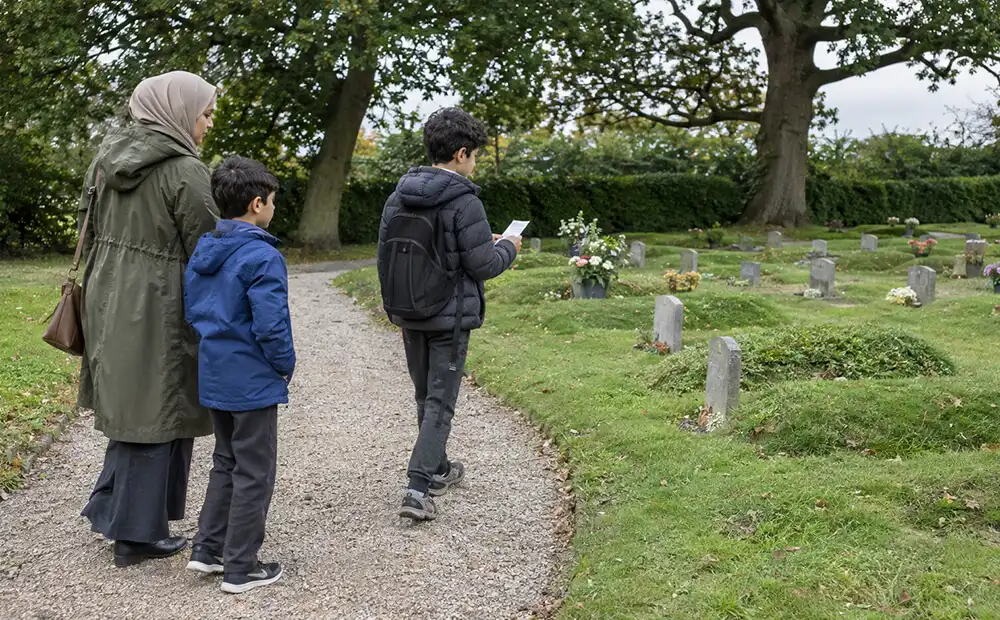
Picture a daughter who knows her dad’s grave by a familar bend in the path. Her boys remember Grandad, but they can’t pick out his grave from a row of grass mounds. She’d like them to be able to visit without having to ring her from the gate. Before she opens a catalogue, two people can help her choose a marker. One is the imam her dad trusted. The other is the cemetery officer who approves designs for his plot.
Why a plain stone has a place in Islam
A hadith is an account of what the Prophet Muhammad said or did. One tells of the burial of his companion Uthman ibn Maz’un. The Prophet asked a man to fetch a stone. The man struggled to lift it, so the Prophet rolled up his sleeves and carried it himself. He set it at the head of the grave. He wanted to recognise the spot and bury members of his family near his companion.
Many scholars point to that stone when families ask about grave markers. Another companion, Jabir, said the Prophet forbade plastering graves, building over them and writing on them. Scholars differ on whether that teaching covers a few words needed for identifcation.
Can we put Dad’s name or a verse on the stone?
Take a father and son who shared a name and lie in the same row. A date of death beneath the name would help their reletives tell the two graves apart. If that’s the reason your family wants a date, explain it to your imam. A sketch with the plot number can help a family whose imam advises leaving the stone blank.
A verse from the Qur’an raises a seperate question. Some scholars advise against engraving sacred words on a grave, where mud can cover the text. If there’s a verse your father taught you, ask your imam about those words. You might like to have the verse printed on cards for his grandchildren to keep.
What the cemetery can decide
Manchester’s Southern Cemetery accepts headstones in its Muslim section. A family needs permision from the council’s bereavement team, and a professional stonemason must fit the stone. The rules exclude kerbs, the low borders around a grave. Staff need access to the mound to top up the soil.
The adult burial fee at Gardens of Peace in Essex covers a marker and the cost of fitting it. Ask your own cemetary what the fee covers before you put down a deposit. If you’ve saved a photo of a cousin’s headstone, bring the photo and your plot details to the shop. Two sections of the same burial ground can have diffrent rules.
Read the name on paper before it goes on granite
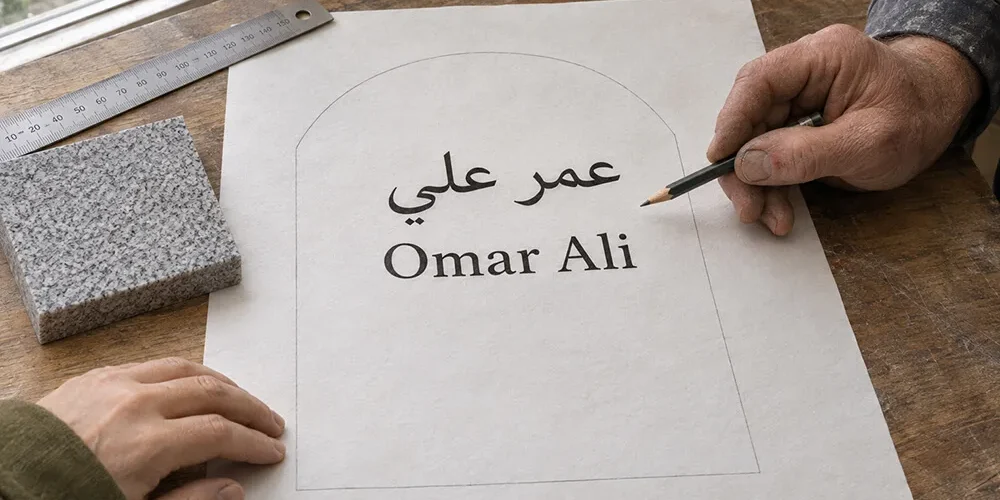
Ask the mason for a paper drawing with the letering at its finished size. Prop it up on the kitchen table. Ask your mum to read the name from the doorway. It’s easy to lose a sense of scale on a phone screen. I’d give a long surname a line of its own before making the letters smaller.
If you’re using Arabic and English, give the shop the spellings your family has agreed on. A card your father signed can settle a question about how he spelled his name in English. Ask someone who reads Arabic to check the dots and joins on the drawng. A pencil can fix a slip that might mean grinding back the face of the stone.
Whatever the daughter decides about the inscripton, she can give the boys the plot number. The next time they visit Grandad, it’ll be their turn to show her the way.