Which Type of Headstone Lasts the Longest?
Why Granite Usually Lasts the Longest
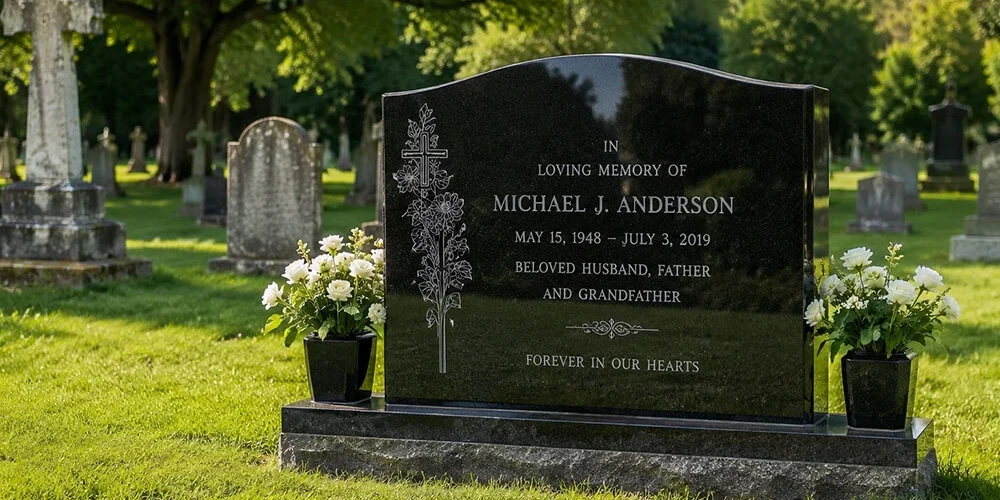
Granite is an igneous rock formed as molten material cooled deep beneath the earth. Its tightly interlocked mineral structure gives it strength and low water absorption. Most granite contains quartz and feldspar. On the Mohs hardness scale, quartz measures 7 and common feldspars measure about 6. Calcite, the main mineral in marble, measures only 3.
This difference helps explain why granite resists scratching and surface wear better than marble. It also tolerates rain, frost and pollution well. The British Geological Survey notes that granite has been used for bridges, docks, building bases and monuments because it can carry heavy loads and weather well.
Granite can’t remain completely unchanged forever. Its polished face may become dull, and lichen can settle on the surface. Yet these changes are often cosmetic. Deep engraveing can stay readable even when the headstone no longer looks new.
A Family Example from the UK
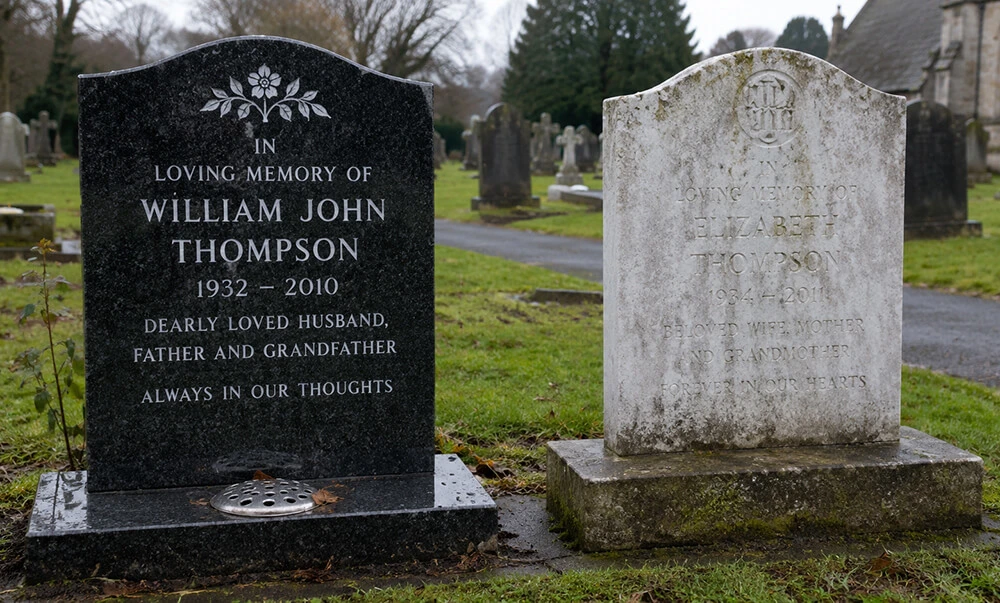
Consider a family in Yorkshire choosing a memorial for their grandfather. They liked a beautifull white marble stone because it felt soft and traditional. Their memorial mason showed them older marble markers in a local cemetary. Several had lost their polish, and rain had begun to soften the fine lettering.
Nearby, dark granite memorials of a similar age still had sharp inscriptions. The family chose dense black granite with sandblasted lettering. They knew it wouldn’t have marble’s gentle appearance, but they felt comforted by the thought that future grandchildren would still be able to read the name.
This example reflects conditions across much of the UK. Frequent rain, repeated wetting and drying, frost, salts and air pollution can all affect stone. Historic England explains that moisture and salt crystallisation may weaken porous materials. It also notes that marble is sensitive to pollutants and can lose its polish.
How Do Other Headstone Materials Compare?
Marble has been used for some of Britain’s most moving memorials. It’s easy to carve, and its pale surface gives a calm, classical appearance. The problem is that marble contains calcite, which reacts with acids in rain and pollution. Fine details may become rounded, while the surface can develop loose grains known as “sugaring.” Marble hasn’t failed as a memorial material, but it rarely wins a direct longevity comparision with granite outdoors.
Slate can also last for centuries. Many old British churchyards contain slate stones with clear lettering. Fine-grained slate absorbs little water and can hold detailed inscriptions. However, lower-grade slate may split along its natural layers. If a family chooses slate, they’re wise to ask where it was quarried and whether it is suitable for the local enviroment.
Sandstone has warmth and character, but its performance varies. Some dense British sandstones are remarkably durable, while softer types absorb more water and shed thin surface layers. Limestone is easy to carve and suits historic settings, but acidic moisture can slowly erase detail. These stones won’t always deteriorate quickly, though their quality should be judged seperately.
Installation Matters as Much as the Stone
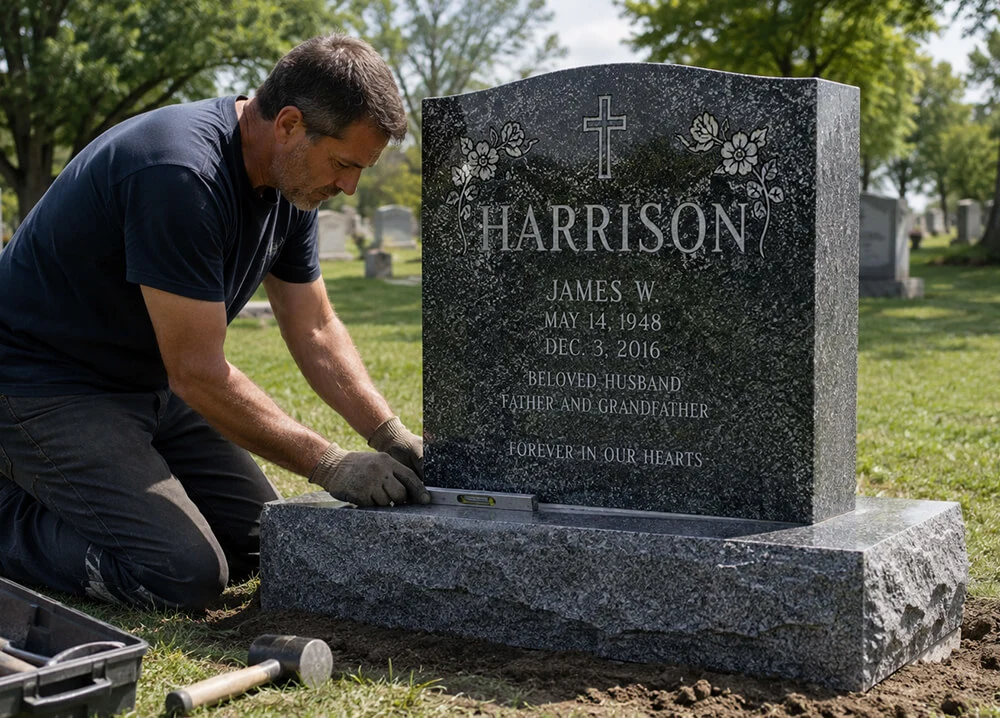
Even the hardest granite may lean or crack if its foundation is poor. Soil can settle, tree roots can move the base, and corroding metal fixings may force stone sections apart. Historic England reports that ground subsidence and weak foundations are common causes of movement in memorials.
A family should ask whether the memorial will be installed by a qualified mason using approved ground anchors and suitable fixings. You’ll also need to check the churchyard or council rules before ordering. Some burial grounds restrict colour, finish, size or stone type.
Cleaning needs care as well. Strong chemicals and pressure washing can harm a memorial. A soft brush, clean water and professional advice are safer. If growth doesn’t hide the inscription or damage the stone, aggressive cleaning may do more harm than good.
What Is the Best Final Choice?
For most families, I would recomend dense, memorial-grade granite with a professionally prepared foundation and deep lettering. Dark granite often provides strong contrast, while medium-grey granite hides dust and water marks. Ask the mason about absorption, frost resistance, stone origin and the wich fixing system will be used.
No headstone is eternal, and that’s part of its humanity. Stone stands in rain, cold and sunlight just as families pass through changing years. Granite simply offers the strongest balance of beauty, readable lettering and long life. It doesn’t preserve every memory, but it gives the name a dependable place to remain.